




Why a colorful runner rug changes everything
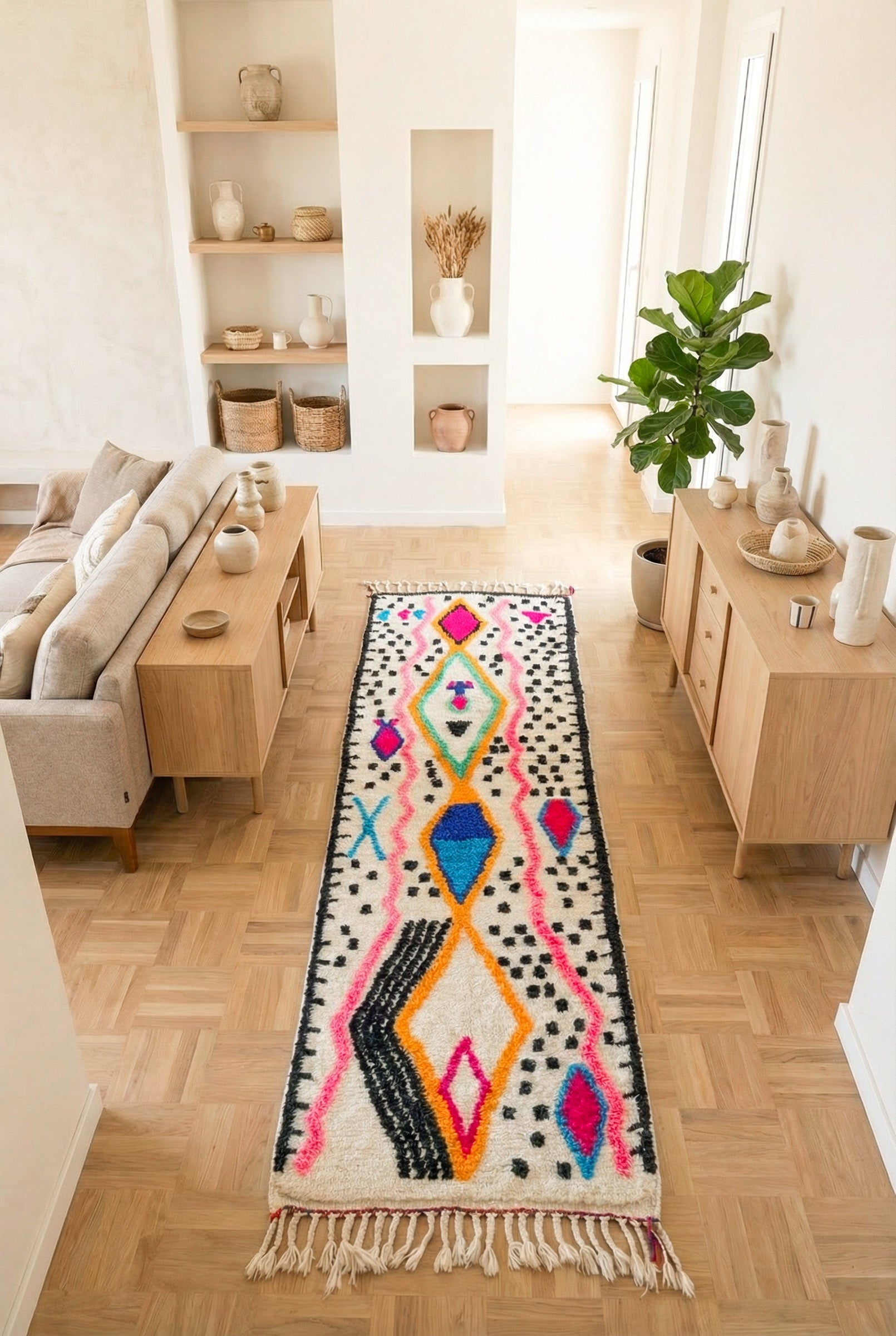
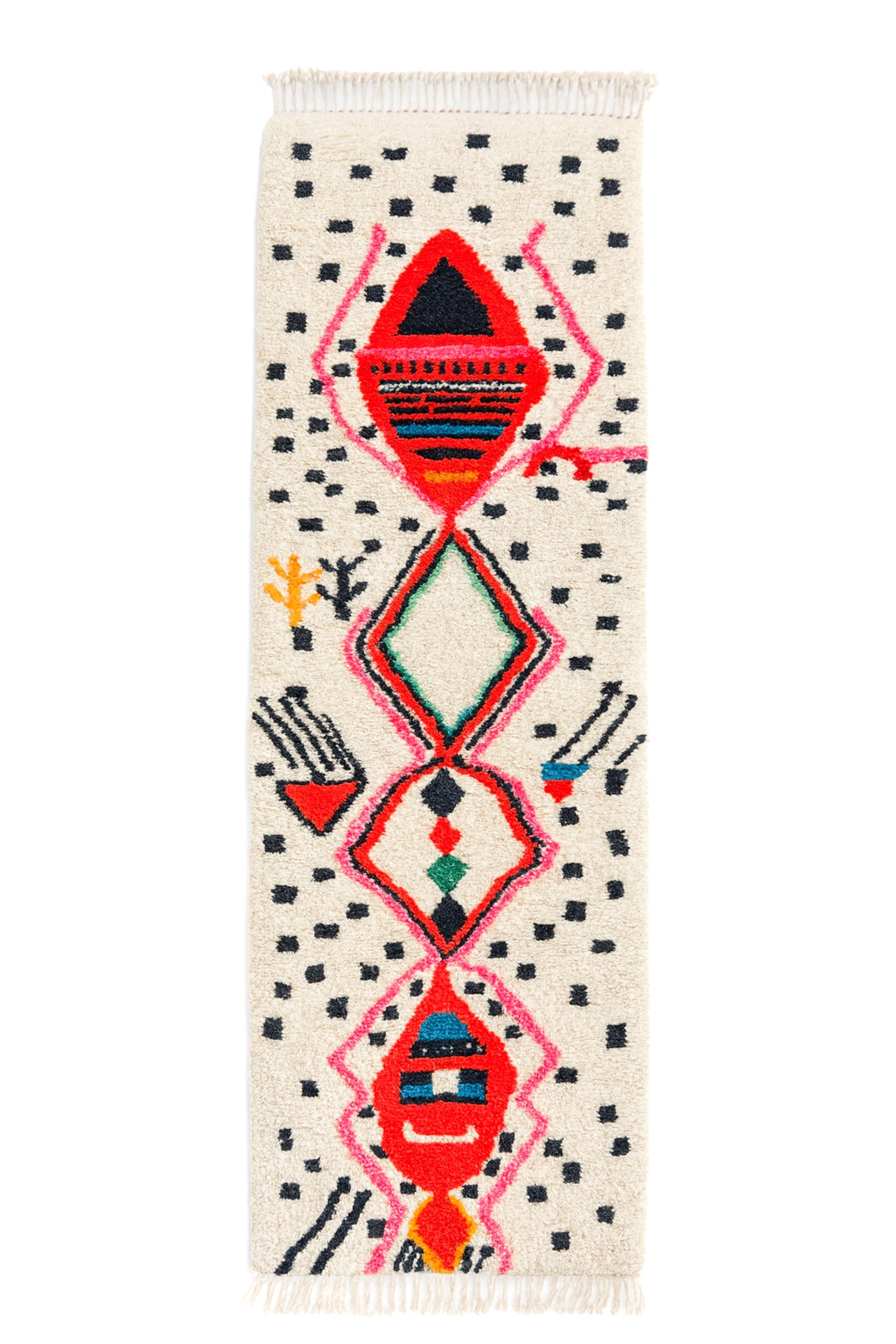
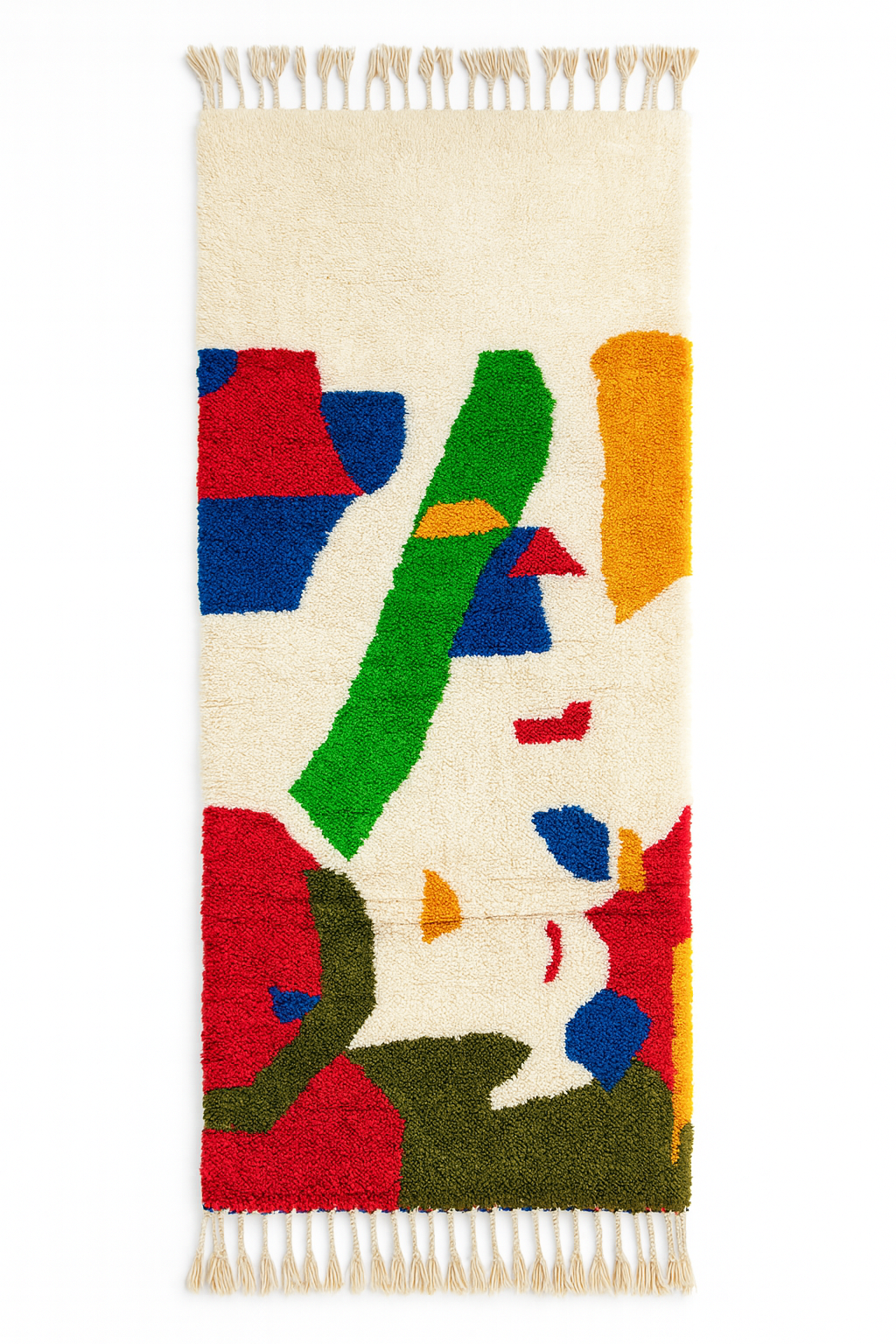
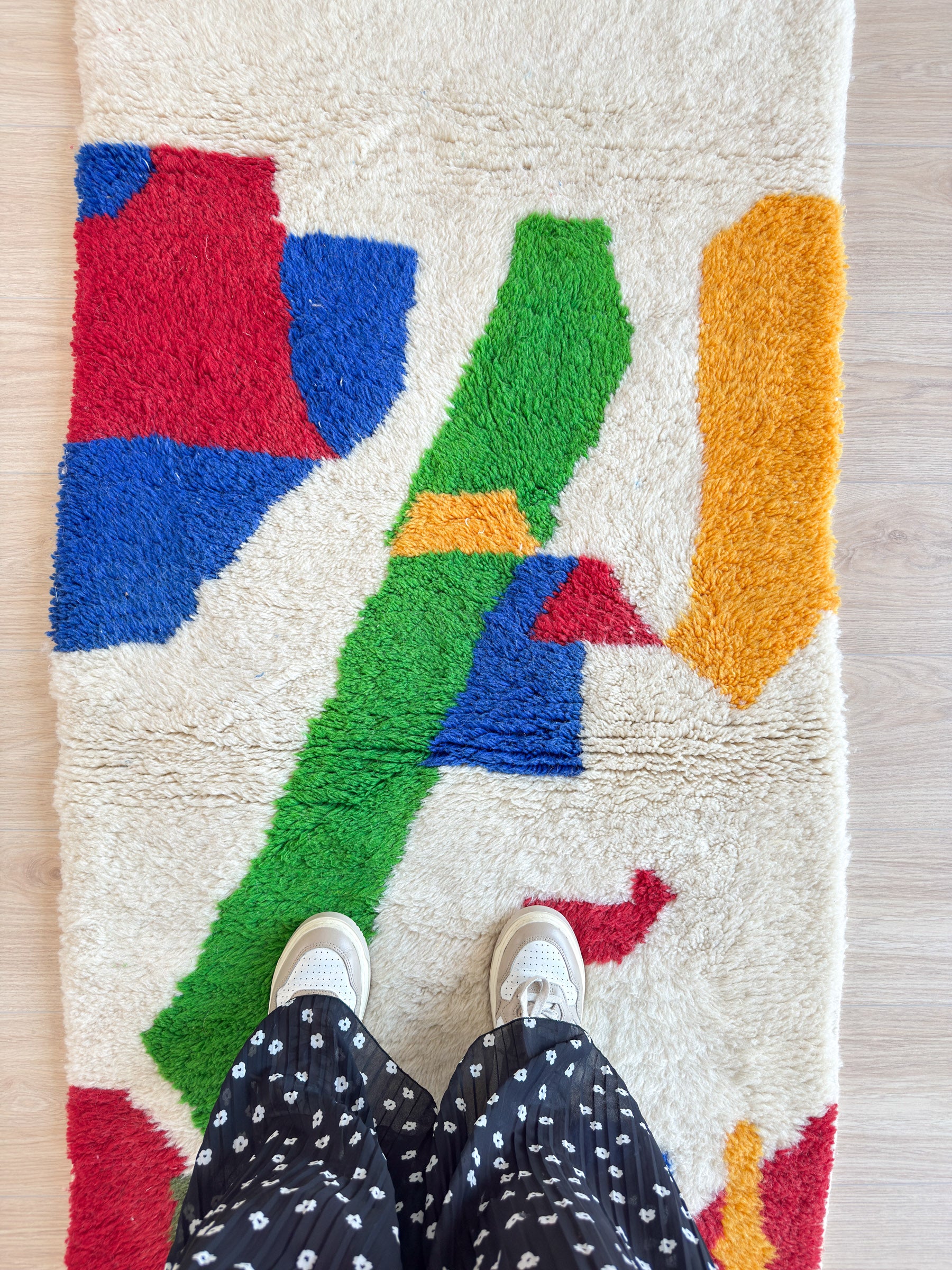
The hallway is often the most overlooked space in the home, a simple passage between two rooms, with no decoration or attention. Yet it is the first space you walk through when coming home, and the last before going out. A colorful Berber runner rug transforms this transit zone into a genuine visual experience. The abstract patterns of the Azilal, zigzags, diamonds, asymmetrical lines, splashes of color, create a dynamic that guides the eye and accompanies the natural movement of walking. In an elongated format, the patterns unfold in sequence, almost like a narrative frieze woven into the wool. The effect is immediate: the hallway goes from a dead zone to a living, welcoming space.
Beyond aesthetics, a wool runner rug offers very practical advantages: it absorbs the sound of footsteps (invaluable in a hallway that echoes), it protects the floor from intensive daily traffic, and it provides a welcome thermal insulation on cold tiles or hardwood floors, especially in winter.
The Azilal rug in runner format: color and creativity
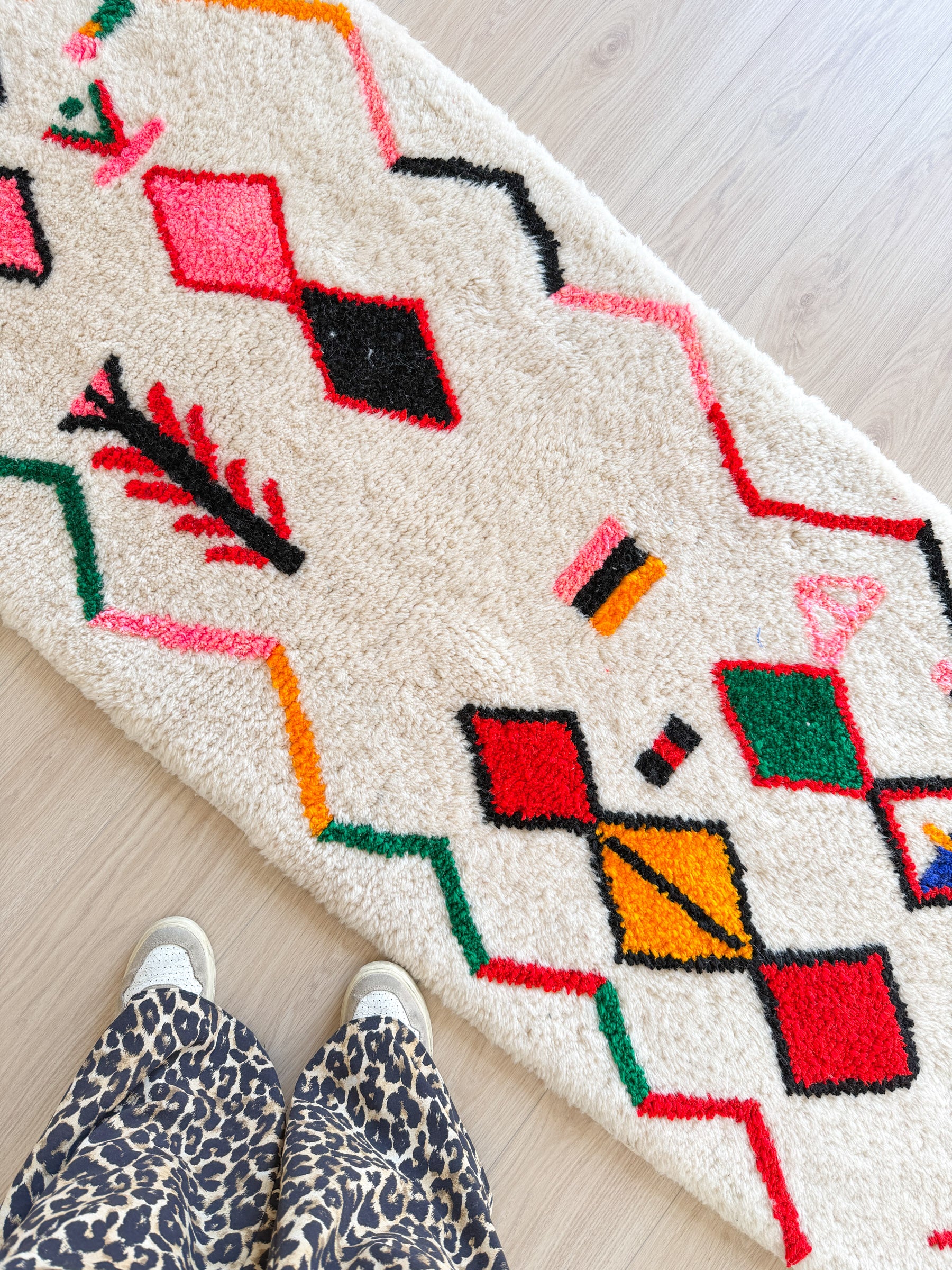
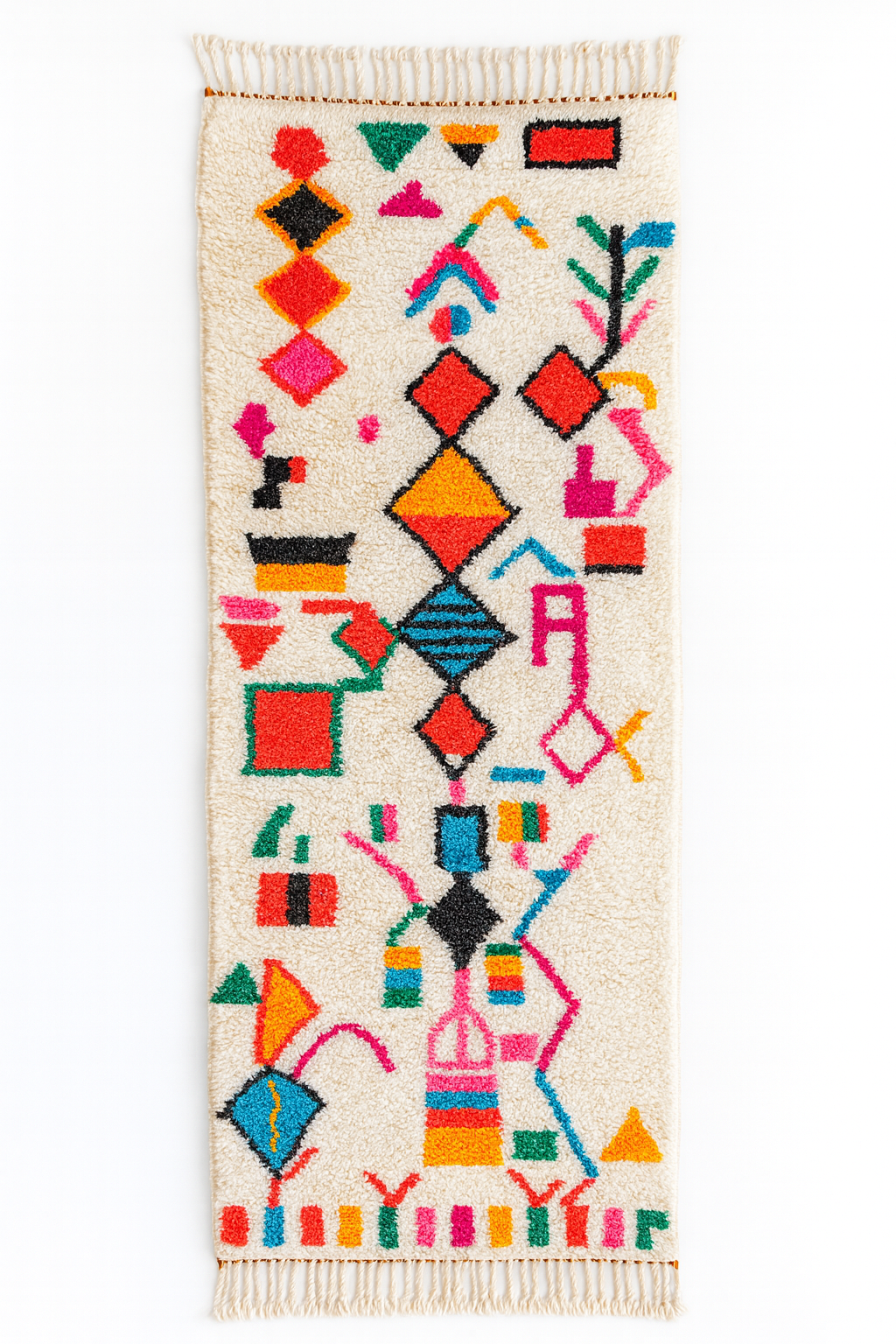
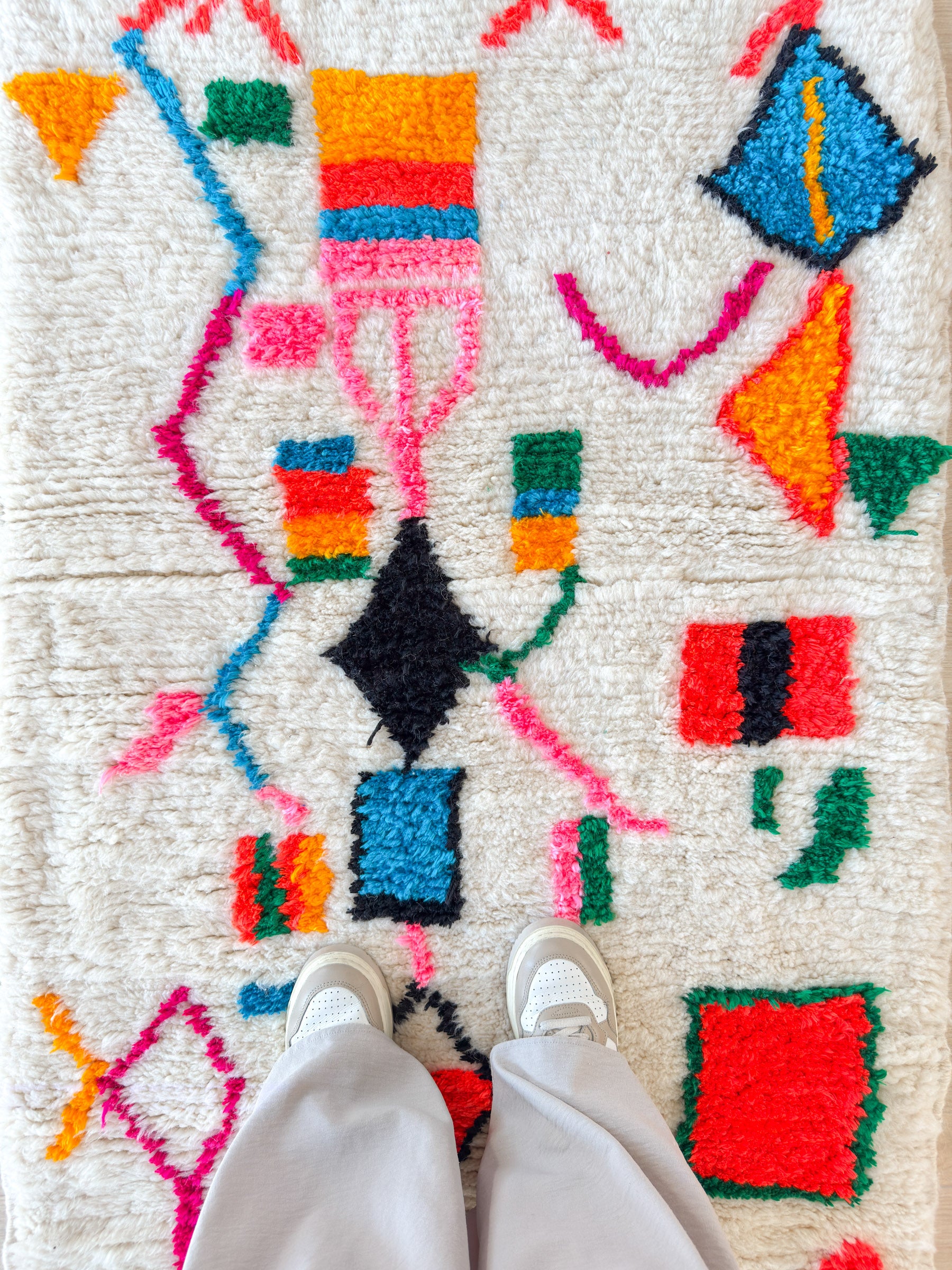
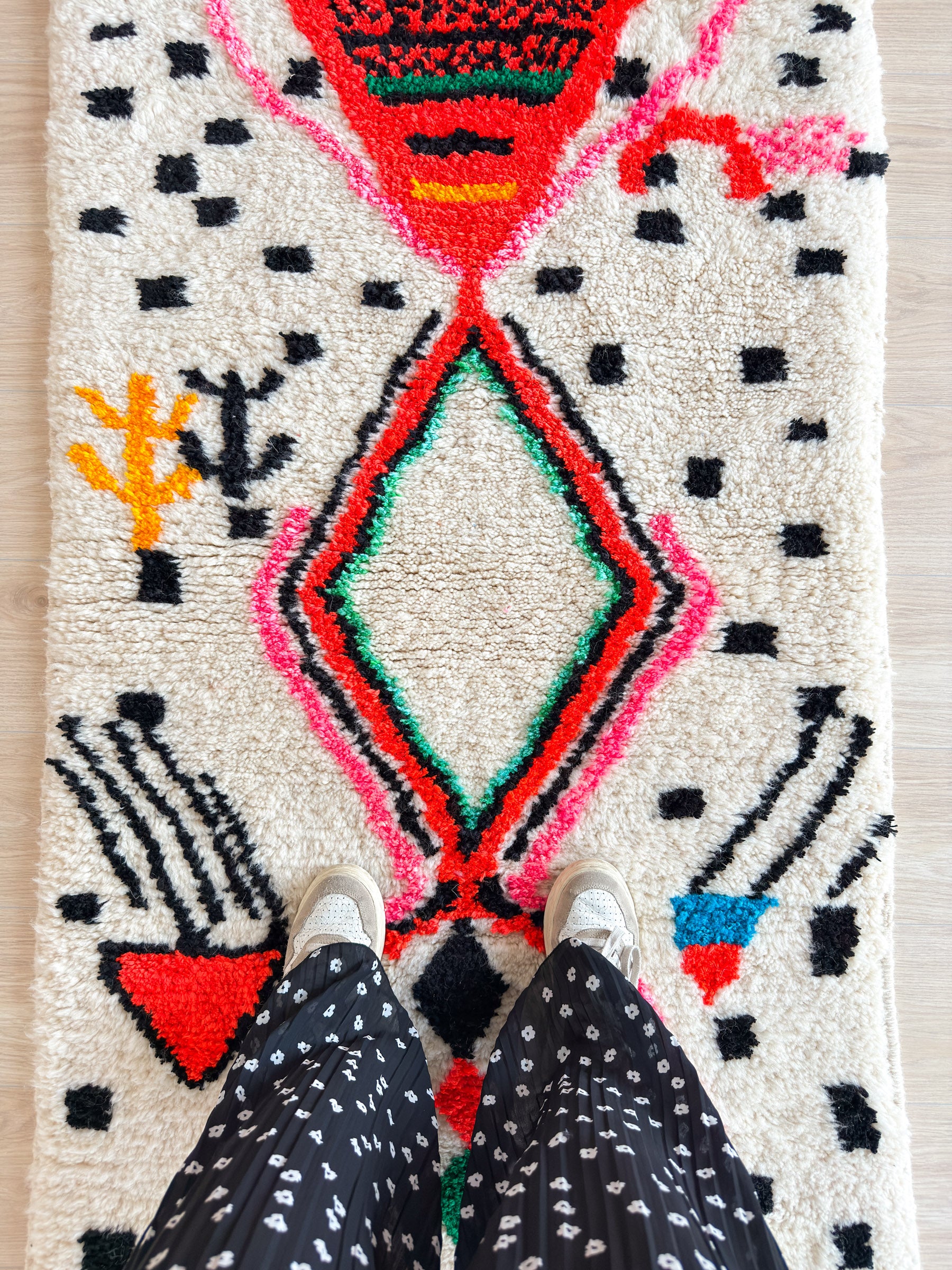
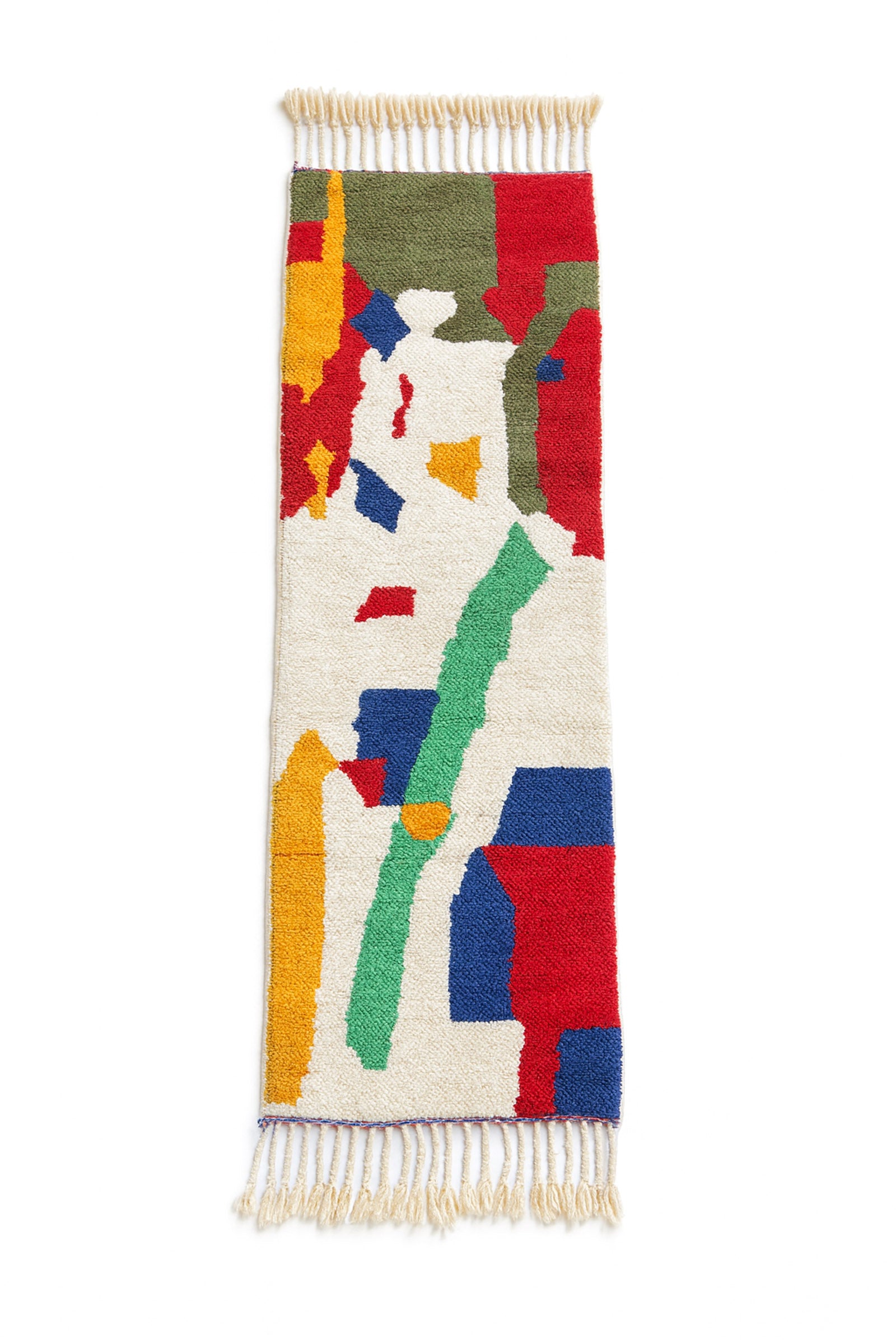
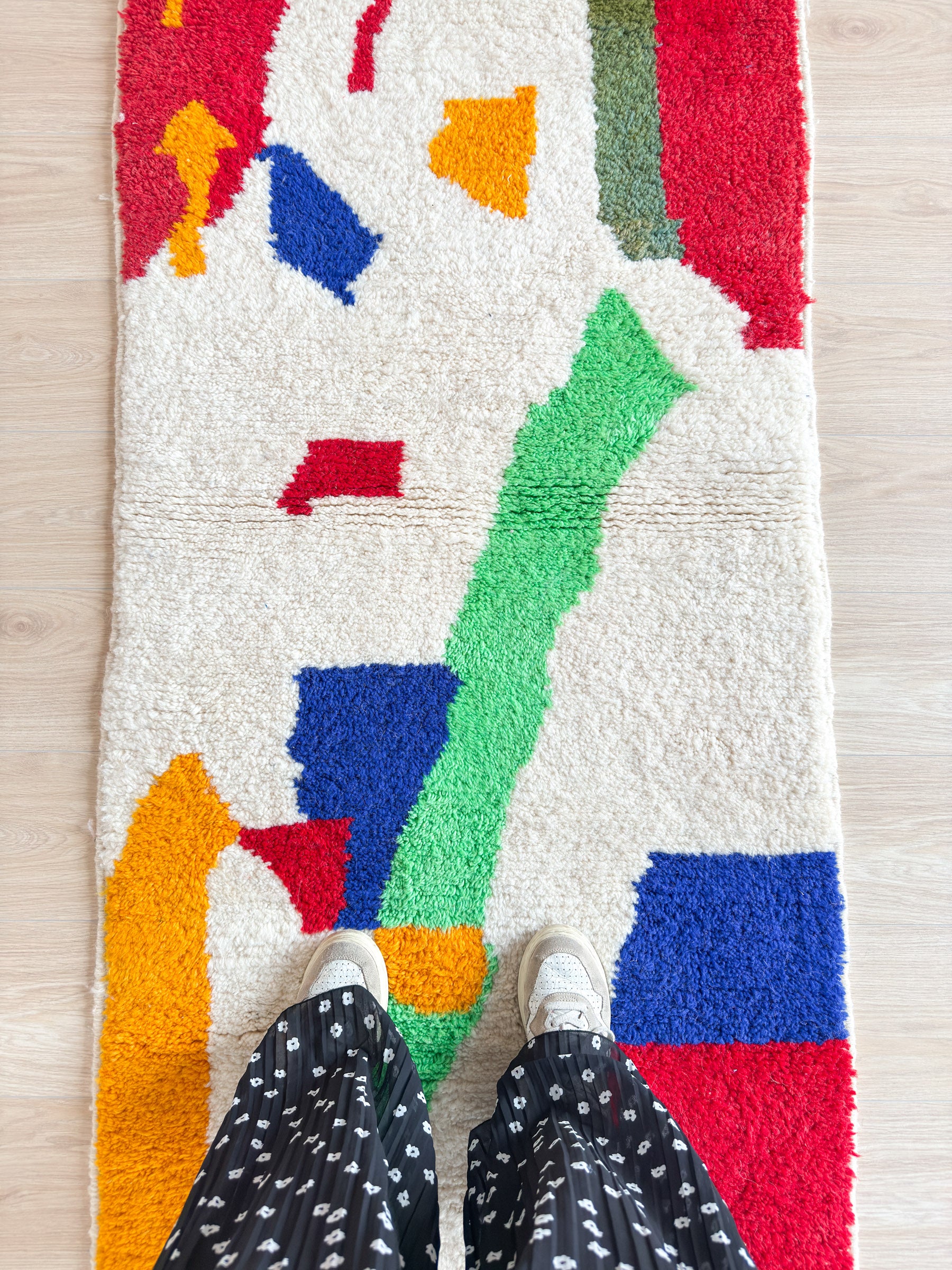
The Azilal rug is the most expressive of all Berber rugs. Originating from the province of Azilal in the High Atlas, it is distinguished by total creative freedom: each weaver works without a pattern, guided by her inspiration and emotions. The base is in natural wool in ecru or cream (approximately 85% sheep's wool, 15% cotton), punctuated with vivid colored touches, pink, blue, green, orange, yellow, black, in dyed wool or cotton threads. Its pile is low, making it particularly suited to the runner format: resistant to intensive traffic, easy to vacuum and not prone to soiling.
In runner format, the Azilal rug takes on a particular dimension. The elongated shape forces the eye to follow the patterns along the length, creating a visual rhythm that classic square or rectangular formats do not allow. It is like unrolling an abstract painting on the floor; each step reveals a new detail, a new color, a new symbol.
Where to place a colorful Berber runner rug?
The elongated format adapts to all passageways, but also to less obvious locations:
Entrance hall, This is the most natural placement. Placed in the entryway, the Azilal runner rug welcomes your visitors with color and character from the very threshold. It protects the floor from shoe wear and makes cleaning easier (shake or vacuum regularly). The entrance sets the tone for the entire interior; a colorful rug immediately announces a lively and welcoming home.
Corridor and passageway, A long hallway between bedrooms or between the entrance and the living room is the classic placement for a runner rug. The rug should cover most of the length of the hallway, leaving 20 to 30 cm of floor visible at each end. Center it within the width of the hallway, leaving symmetrical strips of floor on each side. The Azilal patterns create a perspective that gives the impression of lengthening the space.
At the foot of a bed, lengthwise, As an alternative to the classic bedside rug, a runner placed lengthwise at the foot of the bed creates a band of color that dresses the full width of the bedroom. A striking and very original visual effect.
Along a low piece of furniture, In a living room or lounge, a colorful runner placed along a sideboard, console table or low bookcase creates a decorative frame that highlights the furniture. This is a placement that interior designers often use to structure a long wall.
Kitchen, In front of the sink or worktop, an Azilal runner rug brings softness underfoot during meal preparation. The low pile of the Azilal is suited to this use: it cleans easily and holds up well to occasional moisture. Blot spills quickly.
Staircase (landing), On a staircase landing or at the top of the stairs, a colorful runner rug marks the transition between floors and brings color to an often neutral space.
Bringing color into a narrow space: the right combinations
A hallway or entrance is often narrow and poorly lit. The colorful Azilal rug is precisely designed to bring life to such spaces, but a few pairing principles help maximize the effect:
Light walls + colorful rug, The most effective combination. White, beige or light grey walls bring out the vivid colors of the Azilal and amplify the brightness of the hallway. The rug becomes the only statement piece in the space, which is exactly what is needed in a narrow hallway to avoid visual overload.
Dark walls + colorful rug, More daring, but spectacular if you enjoy cosy atmospheres. A dark green, midnight blue or terracotta wall paired with an Azilal creates a gallery effect; the rug brings light and dynamism within a dark setting.
Playing on color echoes, Pick up one of the rug's colors in a photo frame, a vase or a coat hook to create a visual thread throughout the hallway. Since the Azilal is multicolored, you will always have several colors to echo.
Lighting, A well-lit hallway showcases the rug. A wall light or a spotlight directed toward the floor is enough to reveal the richness of the Azilal's patterns and colors, even in a hallway without natural light.
A feminine art woven to last
Each Azilal runner rug is hand-woven on a traditional wooden loom, knot by knot, by a Berber weaver from the High Atlas. The runner format requires particular skill: the elongated proportions demand maintaining weaving tension and pattern regularity along the entire length, a more demanding exercise than it appears. The sheep's wool used is naturally resistant to wear and soiling, making it an ideal material for areas of intensive traffic. The patterns, protective diamonds, water zigzags, fertility triangles, mountain chevrons, carry an ancestral symbolic language that each weaver interprets freely, making every rug a unique and irreplaceable piece.
Our colorful runner rugs in stock
Each colorful Berber runner rug below is photographed as is; what you see is exactly what you will receive. Abstract patterns, vivid colors, natural wool, elongated format, unique piece: the Azilal runner is the most direct way to transform a forgotten hallway into a living space. In stock in France, shipped within 24 to 48 hours.
Frequently asked questions about colorful Berber runner rugs
What are the dimensions of a colorful Berber runner rug?
Our Azilal runner rugs are unique hand-woven pieces; each has its own dimensions. The runner format is characterized by an elongated shape, significantly longer than it is wide. The exact dimensions are indicated in each product listing, measured including the fringes.
Is an Azilal runner rug resistant to daily traffic?
Yes. The Azilal rug has a low pile and a base of naturally wear-resistant sheep's wool. It is designed to withstand daily traffic in a hallway, entrance or hall. Natural wool is also naturally stain-resistant, which is an advantage in high-traffic areas. We recommend adding a non-slip underlay on smooth floors (tiles, hardwood) to prevent slipping.
How do you care for a Berber runner rug?
Vacuum regularly without a rotating brush. You can also shake it outside to remove dust. In case of a stain, blot with a damp cloth and mild soap without rubbing. For a deep clean, call in a professional wool rug cleaning service. Avoid prolonged exposure to sunlight to preserve the colors.
How do you position a runner rug correctly?
Center the rug within the width of the hallway, leaving symmetrical strips of floor on each side. Leave 20 to 30 cm of floor visible at each end. The rug should cover most of the hallway without touching the walls. On smooth floors, use a non-slip underlay. Before purchasing, check the exact dimensions on the product listing and measure your hallway.
Is a colorful runner rug suitable for a kitchen?
Yes, the low-pile Azilal rug is suited to placement in front of the sink or worktop. It brings softness underfoot and cleans easily. Blot water or food splashes quickly with a damp cloth. Avoid areas where water regularly pools on the floor.
What is the difference from a Beni Ouarain runner rug?
The Azilal runner rug is colorful, low-pile, with freely created abstract patterns; it brings color and energy. The Beni Ouarain runner rug is made of white wool with black geometric patterns, has a long pile, and is more understated and thicker. The Azilal is better suited to high-traffic areas thanks to its low pile, while the Beni Ouarain offers a softer comfort underfoot.